Blog

Everyone: Listen To The Bootstrapping American

Every movement has a tipping point – a time when people say, “no more.” For many Americans, that moment has come.

The moment when we’ve said:

No more government overreach into personal liberties.
No more unsafe cities and vulnerable borders.
No more so-called “progressive” policies sending our nation backward.
No more destruction of the nuclear family.
No more redefining truth and reality.
No more messing with our children.

The movement has a purpose. And it has a voice.

A voice that fights for what’s possible. A groundswell that’s rooted, wise, and visionary.

The voice comes from the bootstrapping American.

The bootstrapping American lives in every state. In every city. And between every map dot.

From flyover states to both coasts, you’ll recognize them.

But you won’t recognize them because of their race, the size of their bank account, their lifestyle, their house of worship, their education, or even their generation.

You’ll recognize them because they are the ones – we are the ones – who are building a brighter future.

We get up and get things done.

Whether we run a business or work for one, we show up.
We create, we make things, and we make things better. 
We invest in our families. We give back to our communities.
We thank God for his provision.
And we get up the next day and work for a better tomorrow, all over again.

Because here’s the thing: As Americans, we should wake up every day and expect a brighter future.

We should have communities that unify us with our shared values, not identity groups that vilify and divide.

We should have safer cities and sensible borders, not unpunishable crimes or unfettered immigration.

We should have a voice in how we raise and educate our children, and we should not be shamed or canceled for speaking up.

We should have a government that answers to the people, not a people who answer to the government.

And we should not be afraid that exercising our basic freedoms will send us to jail.

The bootstrapping American wants the same bright future for everyone who wants a bright future for themselves.

We understand that not everyone gets there without help. So help them, we will. Serve them, we do. With glad and open hearts. But we also understand that helping is not creating a cycle of dependency or failure that keeps a person down.

Building each other up is the movement.
Limited government is the movement.
Unity is the movement.
Individual freedom is the movement.
Hard work is the movement.
Accountability is the movement.
Responsibility is the movement.
Respecting the dignity of all humans is the movement.  

The movement is toward a brighter future.

The voice of the movement is the bootstrapping American.

And it’s a lion’s roar.

###

Originally written July 2024

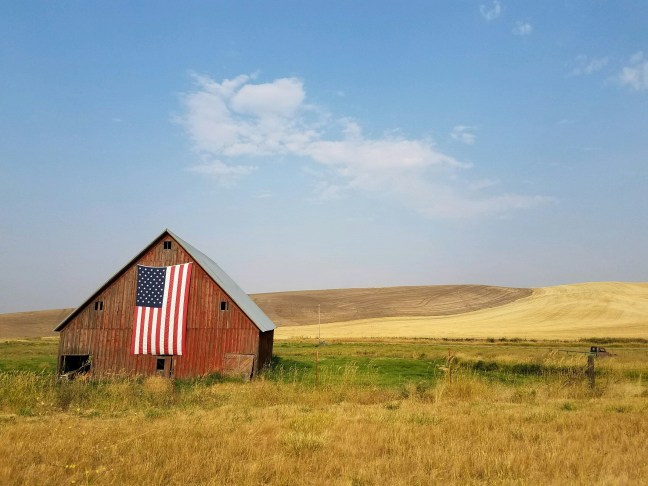
Photo by specphotops on Unsplash

What Freedom Feels Like

Journey On

When you’re fighting addiction, you don’t travel a linear path: It’s more like a real-life, board-less game of Chutes and Ladders. You climb up, slide back down, and loop your way through recovery today, relapse tomorrow, and recovery on the next day, all without knowing what’s ahead.

You waffle between actively giving and consciously refusing love and grace. And then, one day, you remember what it’s like to accept it all and be free.

It’s the feeling you get when the present collides with the past — but, instead of getting crushed between them — you’re able to watch it happen, like you’re observing someone else’s life.

For me, it’s been happening at the gym — a journey I started about 14 years ago.

Happy Places

I used to call the gym my “happy place.”

My workout routine looked something like this: Start with a heart-pumping group exercise class where the instructor yelled at me. Transition into weight machines and free weights where the author of the latest how-to-get-your-best-body article yelled at me. And then head to the scale, where I yelled at myself, louder than any of the others possibly could.

One morning, I stopped registering on the scale, because my weight was somewhere to the left of the lowest number.

I can ask this question now, but not back then: Where’s the “happy” in any of that?

About a year after my exercising and calorie-counting reached peak levels, I tumbled into knowing I needed help for anorexia and bulimia. Shortly after, I sat in front of a dietitian who told me (among other things), “You may never be able to walk into a gym again.”

I begrudged her for it, but she was right. The gym wasn’t just a place for exercising or relieving stress. Although I certainly didn’t plan for it to go this way, my workouts evolved to serve a different purpose. They became another outlet for harmful behaviors, such as obsessing over calories and incessantly judging myself (and others). Environments are a powerful thing.

Since then, the gym and I interacted like oil and water. It didn’t matter what I tried, every activity followed the same, triggering pattern. I’d get through the first several sessions of whatever discipline I chose — cardio classes, treadmill runs, even the walking track — but eventually, my anxiety spiked, the urge to burn calories raged, and I abandoned the gym once again, carrying a whole weight rack’s worth of shame with me.

Showing Up

For the past several weeks, I’ve attended a combination yoga/pilates class — “yoga-lates,” as one of my work friends calls it — on most Monday, Wednesday, and Friday mornings before I head to the office. I really kind of love it.

During the third week, while struggling into cat-pulling-its-tail pose, my inner critic bustled in and chided, “You’re not doing it right. You’re so behind the person the next to you.” But before the old, familiar cycle could continue, a new reply rushed up and covered the shame like water flowing over a riverbed: “You’re enough. It’s enough just to show up.”

Of course, I had always been enough. It always had been enough just to show up. But on that day, I actually believed it.

Healing Places

Last Saturday, I went to a yoga class. One of the first things I noticed was the different-in-a-good-way music selection.

Unlike most yoga soundtracks, which are typically somewhere between slightly bad elevator music and mostly bad easy listening music (and during last week’s class I couldn’t tell if the sound was a lawnmower or a didgeridoo), this musical backdrop pulled from indie, folk, and pop artists — a definite win for my music-loving soul.

Near the end of the class, one of the songs grabbed my attention. The chorus went like this:

You can’t rush your healing
Darkness has its teachings
Love is never leaving
You can’t rush your healing

I breathed into the stretch, nestled into the lyrics, and let all of it wrap around me — the dark behind, the light ahead, and the humbling gifts of love and grace. I wasn’t trying to be the best or be someone other than me. For those several moments, I felt what it was like to just “be.”

It felt more like freedom than anything else I’d felt in a long while.

Rising

Even though addiction isn’t part of everyone’s story, a lot of us go through the same mapless, Chutes-and-Ladders cycle when trying to reconcile our past or parts of our past. We all have memories, and for the most part, that’s a beautiful thing.

However, sometimes the present and the past can get pretty tangled up and downright messy. I’m learning to accept that the brightest moments come when we let the past and present collide. Instead of forcing them to make sense — or getting crushed between them — we rise.

###

Song credit: “You Can’t Rush Your Healing” by Trevor Hall. It even has contemplative banjo (my favorite kind).

Photo credit: Nope, that’s not me in the photo. Photographer Connor McSheffrey snapped it, and I found it here.

Why I Write

I’m often so blown away by my favorite writers that I question why anyone (myself included) does anything but abandon all and read everything they’ve ever written.

For a long time, I thought I shouldn’t write because I hadn’t read enough of those writers. I thought that somehow reading, but not actually writing, would be enough. I was wrong. I need to write. If something inside you just responded “yes!” to that statement, then you probably need to write, too.

I write to make sense of my life and others’ lives. To remember things and to work myself into forgetting things. To defend scars and to confess sins. To open old wounds and discover secrets I don’t even know I’m hiding.

I write with the hope that getting to be a better person means writing about myself at my best – but also at my worst.

Most of all, I write to connect with a part of the world that I can’t explain without a pen and a paper, a whirring laptop, a crayon and a paper napkin, or whatever else I can find to scrawl out the moments that matter.

Why do you write? I’d love to hear from you.